
Simulating Real Game Scenarios: Knuckle Pitches with Junior Hack Attack
Kapatan Baseball is reader-supported: some links on this page are affiliate links, and as an Amazon Associate Kapatan Baseball earns from qualifying purchases at no extra cost to you. Learn more.
Sports Attack Junior B-JHABA
Simulating real game scenarios with Junior Hack Attack provides excellent training in mastering knuckle pitches, which challenges batters and improves junior players’ skills. This practical training setup offers players the opportunity to understand the complexities of the knuckleball, gain experience in handling its unique movement, and enhance their overall game performance through targeted practice and mental training. Sports Attack Junior B-JHABA was subjected to meticulous checks by Kapatan Baseball.
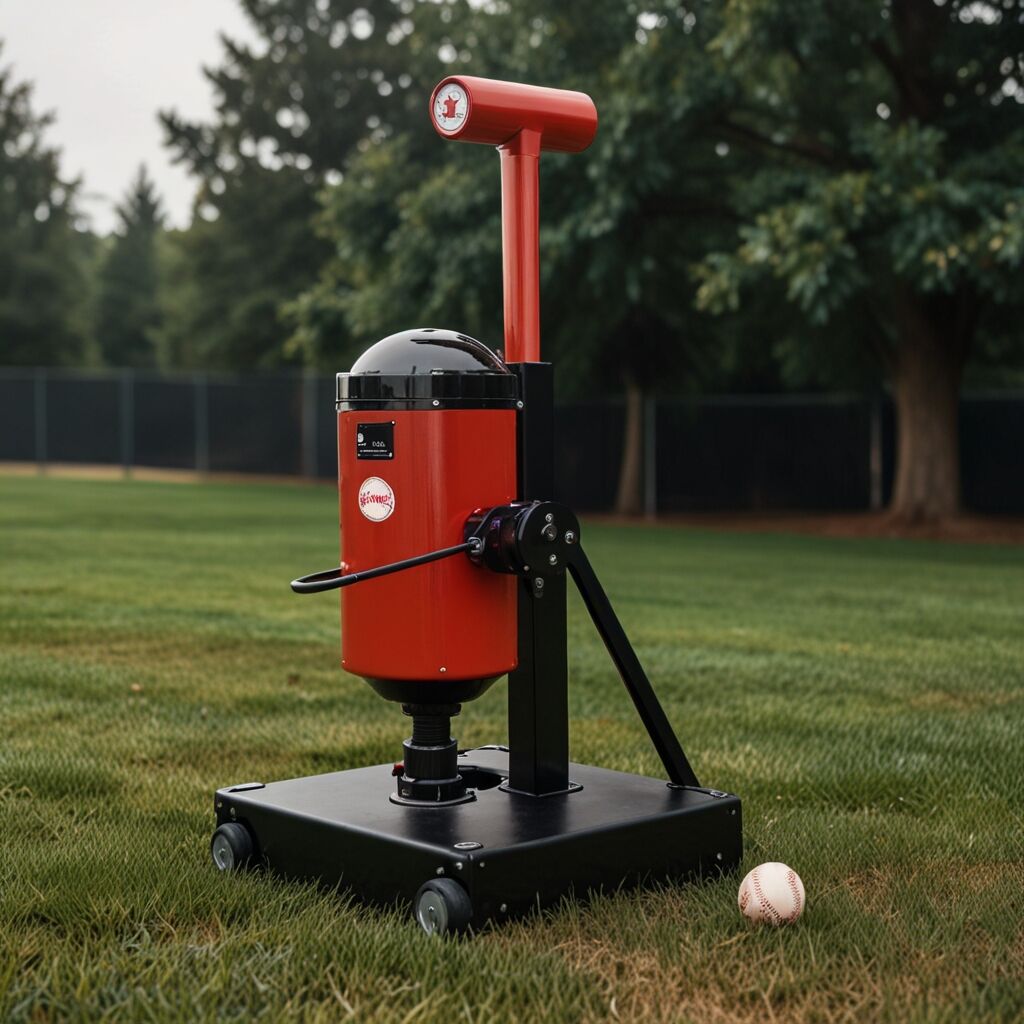
Understanding Knuckleball Mechanics with Junior Hack Attack
The fundamental mechanics of a knuckleball pitch involve minimal spin, allowing air resistance to move the ball unpredictably and deceive opponents. Simulating a knuckleball with a pitching machine, like the Junior Hack Attack, delivers precise control and replicates the ball’s erratic motion effectively. Air resistance plays a critical role in the knuckleball’s movement, as the lack of spin causes uneven air pressure on the seams, creating its famous fluttering effect. Mastering a knuckleball can greatly improve a junior player’s game, as it offers a special edge against batters who struggle to anticipate its trajectory. While practicing knuckle pitches, it is important for young pitchers to adhere to safety precautions, such as maintaining proper form and avoiding overexertion to prevent injuries.
How does a knuckleball compare to other pitches in game scenarios?
The key differences between a knuckleball and a fastball lie in speed and movement, as a fastball achieves higher velocities with a straight trajectory, while the knuckleball moves slower with erratic paths. A catcher can effectively catch a knuckleball by positioning themselves to absorb unpredictable movement and using a mitt with ample cushioning. Historical figures known for mastering the knuckleball, such as Phil Niekro and Tim Wakefield, highlight its unique place in MLB history and its challenging nature. The unpredictability of a knuckleball affects a batter by disrupting timing and making consistent contact difficult, leading to more missed swings or weak hits. The average speed of a knuckleball pitch in MLB typically ranges from 60 to 70 miles per hour, much slower than conventional pitches but challenging due to its atypical motion. The Sports Attack Junior B-JHABA delivers a stable user experience, tested for everyday use.
Integrating Real-World Game Environment with Knuckleball Practice
Replicating game scenarios enhances training effectiveness by immersing players in realistic conditions that develop both skill and mental resilience under pressure. Technology used to simulate real game scenarios for knuckle pitches includes pitching machines like Junior Hack Attack, which offer adjustable settings to mimic various pitch conditions and environments. Environmental factor simulation significantly influences pitching practice by enabling players to adapt to different weather conditions, such as wind and humidity, that impact ball movement. The importance of mental training in handling game pressure lies in helping players build focus and confidence, necessary for executing successful knuckle pitches during critical moments. Introducing game scenario simulations in practice sessions once or twice a week ensures players are consistently challenged while preventing burnout and maintaining skill progression.
Can real game scenarios improve success rates with knuckle pitches?
Players psychologically benefit from practicing in simulated environments by gaining experience in realistic settings, which boosts confidence and reduces anxiety during actual games. The limitations of current simulation technology for baseball include restricted variability in pitch types and environmental conditions, which can hinder complete authenticity. Critical factors for creating a realistic game scenario in practice involve using comprehensive setups that mimic game elements, from environmental conditions to crowd noise representations. Coaches measure improvement in knuckleball performance over time through metrics such as pitch accuracy, movement consistency, and game statistics like strikeouts and hitter reactions. For optimal results, players should practice knuckleball pitches approximately four to five hours a week, ensuring skill development with sufficient rest and recovery.