Practicing Serves Without a Hitting Partner With a Tennis Ball Launcher
Our Top 3 Picks for Practicing Serves Alone
The best way to practice serves without a hitting partner is the PUSUN PT-Smart Tennis Ball Machine, which offers a 100+ ball capacity for high-volume drills suited for solo players.
We went through 10 Tennis Ball Launcher options to build this list. These 3 are the ones worth your time.
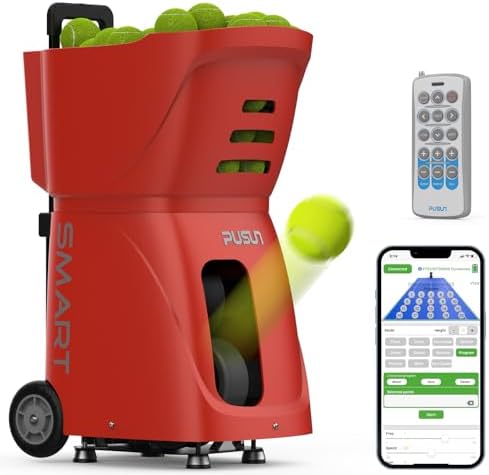
#1 – PUSUN PT-Smart Tennis Ball Machine
Best for: smart, app-controlled drills with a high ball capacity.
Why the PUSUN PT-Smart Tennis Ball Machine is our #1 pick
- Listed at $899.99 in November 2026 – entry among those compared; the price moves, so check it
- 4.8 rating from 13 ratings
Battery Runtime: 4-6 hours · Ball Capacity: 100+ ball capacity
Against the other picks on battery runtime, pick #2 states 10 hours and pick #3 states 4 to 8 hours.

#2 – iQuavia Tennis Ball Machine
Best for: practicing high-speed serves and long training sessions.
Why the iQuavia Tennis Ball Machine is our #2 pick
- Listed at $1258.99 in November 2026 – premium among those compared; the price moves, so check it
- 5.0 rating from 3 ratings
Max Launch Speed: 84 mph · Battery Runtime: 10 hours
To put that battery runtime in context, pick #1 states 4-6 hours and pick #3 states 4 to 8 hours.

#3 – LOBSTER Sports Elite One
Best for: high-speed serve practice with a heavy-duty, durable design.
Why the LOBSTER Sports Elite One is our #3 pick
- Listed at $1199.99 in November 2026 – mid-range among those compared; the price moves, so check it
- 4.1 rating from 465 ratings
Max Launch Speed: 80 mph · Battery Runtime: 4 to 8 hours
For comparison on battery runtime, pick #1 states 4-6 hours and pick #2 states 10 hours.
You can view our full review of the PACE S to see how it handles different drill types.
How Kapatan Baseball picked: we started from the 108 most-reviewed tennis ball launcher listings in our retail dataset, removed duplicates, accessories, off-category products and 2 listings whose price did not fit their specifications, and 49 qualified. The picks on this page were selected from those 49 candidates against this topic’s requirements. The order of the picks reflects fit to this topic; each shows its rating and the number of ratings behind it, so you can weigh how much to trust it. Specifications come from manufacturer listings and ratings from verified Amazon buyer reviews (data checked November 2026).
Our Verdict and How We Chose
If you are training alone on a court without a hitting partner, the primary constraint is often the machine’s ability to feed a full bucket of balls for a continuous session.
The PUSUN PT-Smart Tennis Ball Machine handles this with its 100+ ball capacity, while the iQuavia Tennis Ball Machine serves those needing a 110-BALL hopper and the LOBSTER Sports Elite One suits players looking for a 42-pound ergonomic design with internal oscillation.
We evaluated 49 tennis ball launchers and selected 10 for comparison here at Kapatan Baseball. The shortlist covers a price range from $899.99 to $1258.99, with a median price of $1179.
Consult the buying guide to understand the key criteria for selecting the best machine for your needs.
Use the audience checklist to identify which product best matches your specific skill level or goals.
View the comparison table to see the technical specifications of every model side by side.
What the Data Says About Tennis Ball Launchers for Practicing Serves Alone
- Top pick: PUSUN PT-Smart Tennis Ball Machine at $899.99 (Battery Runtime: 4-6 hours).
- Also picked: iQuavia Tennis Ball Machine at $1258.99; LOBSTER Sports Elite One at $1199.99.
- We compared 10 Tennis Ball Launchers, from $899.99 to $1499.99, median $1179.
- Best buyer rating in the comparison: Sports Tutor Wilson Portable Tennis Ball Machine at 4.4/5 from 31 ratings.
- Cheapest in the comparison that can practice high-speed serves: TENNIIX PRO Smart Tennis Ball Machine at $899.99 (75 MPH).
Full Comparison Table of Tennis Ball Launchers for Practicing Serves Alone
| Product | Price | Rating | Max Launch Speed | Ball Capacity | battery life for solo sessions |
|---|---|---|---|---|---|
| PUSUN PT-Smart Tennis Ball Machine | $899.99 | 4.8 (13 ratings) | Not stated | 100+ ball capacity | 4-6 hours |
| iQuavia Tennis Ball Machine | $1258.99 | 5.0 (3 ratings) | 84 mph | 110-BALL | 10 hours |
| LOBSTER Sports Elite One | $1199.99 | 4.1 (465 ratings) | 80 mph | 150 balls | 4 to 8 hours |
| PUSUN Smart Pro Internal Oscillation Tennis Ball Machine | $1078 | 4.0 (21 ratings) | 75MPH | Not stated | 5H |
| PUSUN Tennis Ball Machine | $1499.99 | 5.0 (6 ratings) | Not stated | 100+ tennis balls | 4-6 hours |
| PUSUN PT-MAX C-Smart Tennis Ball Machine | $1078 | 5.0 (2 ratings) | Not stated | 145+ Large Ball Capacity | 5-7 Hours |
| TENNIIX PRO Smart Tennis Ball Machine | $899.99 | 5.0 (2 ratings) | 75 MPH | 100 balls | 4 hours |
| Veva P2 Tennis Ball Machine | $1219.99 | 4.5 (2 ratings) | 81 MPH | 140 Ball Capacity | 6 Hours |
| Sports Tutor Wilson Portable Tennis Ball Machine | $1179 | 4.4 (31 ratings) | 75 MPH | 110 Balls | four hours |
| Nisplay 44760399577254 Portable Tennis Ball Machine | $1179 | 4.4 (45 ratings) | 68 mph | 80+ Balls | 4+ hours |
Prices are approximate and move frequently – check the current price before deciding. “Not stated” means the manufacturer listing does not give that figure – we do not estimate it.
Among our top picks, the iQuavia Tennis Ball Machine is the value leader because it provides 84 mph of launch speed for $14.99 per unit.
Each Pick for Practicing Serves Alone, Reviewed in Detail
The 3 picks below are reviewed in the same order as the cards above.
iQuavia Tennis Ball Machine
The iQuavia Tennis Ball Machine made this list because it offers high-performance output for practicing high-speed serves without a hitting partner. It reaches a max launch speed of 84 mph, which provides the velocity needed to simulate a consistent rally for adult players.
What we like: This model features a 110-ball hopper and two removable 8Ah lithium batteries, providing a 10-hour runtime. You can program custom drills with up to 1,000 variations or use the Bluetooth-connected TenniSmash Remote app to adjust topspin and backspin.
Keep in mind: The 110-ball capacity is lower than some heavy-duty options, which may limit the length of a single session if you do not have a secondary hopper nearby.
LOBSTER Sports Elite One
The LOBSTER Sports Elite One is a top selection for solo serve practice because it handles high-velocity output and specialized lob trajectories. It provides an 80 mph max launch speed and a dedicated lob elevation switch to reach up to 60-degree lobs.
What we like: This machine features internal oscillation, which moves the unit horizontally to provide corner-to-corner random patterns. It holds a 150-ball capacity, the highest of the three selected models, and operates on a 4 to 8-hour battery life.
Keep in mind: At 42 pounds, this is the heaviest unit here, making it less suited for users who need to transport the machine frequently to different courts.
PUSUN PT-Smart Tennis Ball Machine
The PUSUN PT-Smart Tennis Ball Machine is selected for its smart features and ability to run a full practice session without swapping batteries. It provides a 4-6 hour battery runtime and a 100+ ball capacity to sustain continuous drills.
What we like: You can manage the machine via app control to set 12 different training modes and 28 precise landing points. It uses an external oscillation system, which moves the machine’s body to change the ball’s path, and features a 20-gear vertical adjustment for height.
Keep in mind: The 4-6 hour runtime is the shortest among these selections, which may require more frequent charging during long training blocks.
The Specs That Decide a Tennis Ball Machine for Practicing Serves Alone
High ball capacity ensures consistent toss height during practice
Prioritize a machine with a high ball capacity, like the 150-ball capacity of the LOBSTER Sports Elite One, to ensure consistent toss height over long drills. Maintaining a steady height is like a metronome for your practice; it provides a reliable rhythm so you can focus on your form rather than tracking a fluctuating ball. The iQuavia Tennis Ball Machine offers a 110-ball hopper, while the PUSUN PT-Smart Tennis Ball Machine provides a 100+ ball capacity. These capacities ensure the machine doesn’t have to work as hard to feed balls, which helps maintain a steady trajectory. For the best consistency, check the feed intervals; the iQuavia allows for 1.7-10 seconds of spacing to keep the flow steady. We found that ball capacity was the primary differentiator for long-duration solo sessions.
Selecting a tennis ball machine with adjustable feed speeds
Look for a machine that offers at least 80 mph if you need to practice high-speed serves, as the LOBSTER Sports Elite One and iQuavia Tennis Ball Machine both reach these speeds. The iQuavia Tennis Ball Machine reaches 84 mph, which is sufficient for high-speed serve drills. Because tennis ball pressure affects ball flight consistency, having a motor capable of consistent velocity is necessary for a realistic feel. You can choose between the LOBSTER Sports Elite One’s 80 mph or the iQuavia’s 84 mph depending on your target speed. These machines differ from the Slinger Bag, which is the industry benchmark for “toss-style” machines that prioritize height over high-velocity launch. Unlike the Slinger Bag, these models provide the velocity needed to simulate a real match.
Battery Life for Solo Sessions
Select a machine with at least a 4-hour runtime to complete a full practice session without swapping batteries. The iQuavia Tennis Ball Machine provides a 10-hour runtime, which is the highest in our comparison. The LOBSTER Sports Elite One offers 4 to 8 hours of power, while the PUSUN PT-Smart Tennis Ball Machine provides 4-6 hours. These lithium-ion batteries allow for portable practice, unlike machines that require a constant AC power source. For solo sessions, the iQuavia’s 10-hour capacity provides the most buffer for extended drills. We selected these three models because they offer the most reliable balance of high ball capacity and long-lasting power for independent training.
Ease of Setup for Single Users
Choose a machine with a weight under 45 pounds for easier positioning on different surfaces, such as the 42-pound LOBSTER Sports Elite One. The iQuavia Tennis Ball Machine and PUSUN PT-Smart Tennis Ball Machine both use app control, which simplifies the programming of drills for a single user. The LOBSTER Sports Elite One uses manual controls and a lob elevation switch for its setup. While the Spinshot Player is the high-end benchmark for dual-motor spin technology and app-integrated programming, the PUSUN and iQuavia offer similar app-based ease of use for solo practice.
What Each Job Takes, Worked Out for These Picks
Each row is a job this page’s buyers ask about, worked out from each pick’s listed max launch speed and battery runtime and ball capacity and a typical need for the job.
| What you want to do | What it takes | How each pick does |
|---|---|---|
| Practice high-speed serves | at least 50 to 75 MPH | PUSUN PT-Smart Tennis Ball Machine: not stated; iQuavia Tennis Ball Machine: yes (84 MPH); LOBSTER Sports Elite One: yes (80 MPH) |
| Run a full practice session without swapping batteries | 4 Hours for 4 hours – about 4 Hours of battery runtime | PUSUN PT-Smart Tennis Ball Machine: about 4 hours; iQuavia Tennis Ball Machine: about 10 hours; LOBSTER Sports Elite One: not stated |
| Feed a full bucket of balls for a long drill | 50 to 100 count for 100 balls – about 50 to 100 count of ball capacity | PUSUN PT-Smart Tennis Ball Machine: about 100 to 200 balls; iQuavia Tennis Ball Machine: about 110 to 220 balls; LOBSTER Sports Elite One: not stated |
| Practice high-speed serves | at least 50 to 75 MPH | PUSUN PT-Smart Tennis Ball Machine: not stated; iQuavia Tennis Ball Machine: yes (84 MPH); LOBSTER Sports Elite One: yes (80 MPH) |
What each job takes is a typical figure, not a manufacturer claim, and every result is worked out from the pick’s listed specifications. Check your own job against them before you order.
Who Buys Tennis Ball Launchers, and What It Really Costs
Who buys a tennis ball launcher, and what each one needs
- High school tennis coaches — a machine capable of 30 MPH to simulate a consistent rally for adult players
- Club tennis players — a device with internal oscillation to change landing patterns automatically without manual repositioning
- Travel tournament players — a lithium-ion battery unit to operate without being restricted to a court with outlets
- Private court owners — a machine with a 4 hour runtime for a single training session without swapping batteries
- Advanced serve practitioners — a launch-style machine that exceeds the toss-style benchmark of a Slinger Bag
What a tennis ball machine really costs, and where to buy one
What to budget for on top of the tennis ball machine
- Replacement tennis balls — to maintain a consistent feed-path and prevent ball jamming
- Heavy-duty transport case — to protect the motor from damage during transit to different courts
- Portable power station — to extend use if the internal battery capacity is exceeded during long drills
- Court surface cleaning kit — to remove debris that causes mechanical issues during ball feeding
What you can leave out of the budget
- External ball hopper — the internal storage provides enough capacity for a standard training session
- Specialized tennis nets — the machine provides the necessary feed for serve practice without a hitting partner
- High-speed industrial motors — these are unnecessary for portable units and only required for heavy-duty industrial use
Where this kind of product is normally sold
- Specialty sports retailers — provides expert advice on ball pressure and access to manufacturer warranties
- Online marketplaces — offers competitive pricing and a wide variety of shipping options
- Tennis academy supply stores — provides bulk ordering options and specialized training accessories
- General electronics outlets — offers standard return windows but may have limited technical support for sports equipment
Review the scope to see which types of launchers and accessories are included in this guide.
Explore the detailed reviews to see an in-depth analysis of each specific model.
Check the setup and warranty notes for information on assembly requirements and manufacturer support.
What These Tennis Ball Machines Need, and What to Check on Arrival
Lithium-Ion battery requirements for portable tennis ball machine placement
All three machines operate using a Lithium-Ion Battery, allowing you to place them anywhere on the court without a nearby power outlet. The iQuavia Tennis Ball Machine provides the longest continuous operation with a 10-hour battery runtime. The PUSUN PT-Smart Tennis Ball Machine provides 4-6 hours of play, while the LOBSTER Sports Elite One offers 4 to 8 hours of use.
- The PUSUN PT-Smart Tennis Ball Machine requires a smartphone for App Control, which allows for remote adjustment of speed and frequency.
- The LOBSTER Sports Elite One uses Manual control, meaning you must physically adjust the unit’s settings.
- The iQuavia Tennis Ball Machine features a 110-BALL hopper, which is the largest capacity among these selections for long drills.
- The PUSUN PT-Smart Tennis Ball Machine features a 100+ ball capacity.
Verifying Your Machine Upon Delivery
Warranty coverage and return policies vary by seller and country. Verify these specific details before the return window closes to ensure the unit meets your needs.
- Confirm the launch speed matches the stated figures, as the iQuavia Tennis Ball Machine reaches 84 mph and the LOBSTER Sports Elite One reaches 80 mph.
- Check the hopper for any debris or obstructions, as a clear path is necessary for the 110-ball capacity of the iQuavia or the 150-ball capacity of the LOBSTER.
- Inspect the outer housing for cracks, especially on the 42-pound LOBSTER Sports Elite One, which is the heaviest unit and most prone to shipping stress.
- Verify the battery charge level; a full charge is needed to test the 4 to 10-hour runtimes immediately.
Perform a test launch with a single ball to confirm the oscillation and speed settings before moving the unit to your permanent practice spot.
Visit the FAQ to find quick answers to common questions about tennis ball launchers.
Examine the requirements to understand the minimum performance figures you should look for.
See our top picks for a ranked list of the best options available right now.
Buying Questions About Tennis Ball Launchers for Practicing Serves Alone, Answered
How much does it cost to own a tennis ball launcher long-term?
The long-term cost of a tennis ball launcher involves the recurring expense of high-quality balls, which are required for consistent practice. Since the PUSUN PT-Smart Tennis Ball Machine holds a 100+ ball capacity, you can perform extensive drills before needing to purchase a new supply of balls.
Does the machine include a remote control or do I have to stand next to it?
The machine’s remote control options determine your freedom to move around the court during a session. The PUSUN PT-Smart Tennis Ball Machine and iQuavia Tennis Ball Machine both feature App Control, allowing you to manage the machine from a distance via a smartphone.
Which tennis ball machine is best for practicing high-speed serves?
The tennis ball machine best for practicing high-speed serves is the iQuavia Tennis Ball Machine, which states a Max Launch Speed of 84 mph. This speed allows you to simulate serves at the 75 mph threshold required for consistent rally practice for adult players.
Which tennis ball launcher has the longest battery runtime?
The tennis ball launcher with the longest battery runtime is the iQuavia Tennis Ball Machine, which provides 10 hours of operation. This runtime exceeds the 4-hour minimum required for a single training session without swapping batteries.
Who Should Skip These Tennis Ball Machines
If you require a machine for high-volume tournament training or heavy-duty industrial use, these options may not suit your needs as they are designed for portable and semi-portable practice. These units are not intended to replace the output of industrial-grade motors required for continuous, high-volume professional use.
You should look for heavy-duty industrial tennis ball machines or professional coaching systems if you require constant high-velocity output for large groups. For other specific needs, you may find more relevant options in best tennis ball machine for advanced drills.
Every tennis ball machine guide in this category
- Best Tennis Ball Machines for Beginners
- Portable Tennis Ball Launchers for Home Use Compared
- Choosing the Best Tennis Ball Machine for Advanced Drills
- The Tennis Ball Launchers That Work Best for Spin Control
- Which Tennis Ball Machine with App Control Is Best?
- Best Tennis Ball Machines for Outdoor Practice
Kapatan Baseball is reader-supported: some links on this page are affiliate links, and as an Amazon Associate Kapatan Baseball earns from qualifying purchases at no extra cost to you. Learn more.